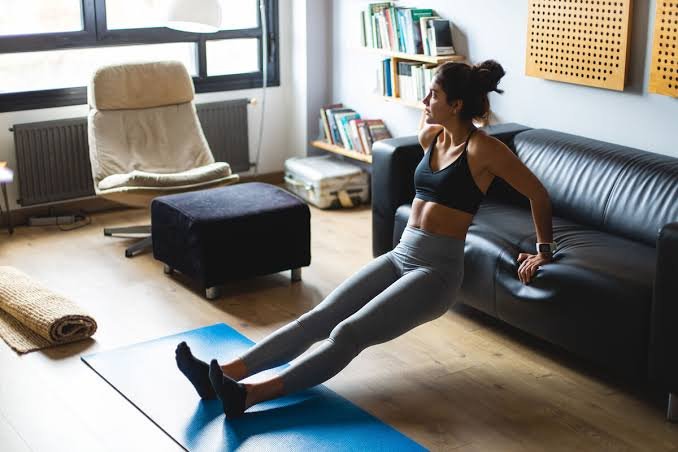
“I don’t have time to go to the gym” is probably the most common excuse for skipping exercise, and honestly, it’s a fair one for a lot of people juggling work, commute, and family. Here’s the good news — you genuinely don’t need a gym membership or a single piece of equipment to get fit.
Home workouts without equipment have gotten a bad reputation as somehow “less effective” than gym training, which just isn’t true for beginners and even intermediate fitness levels. Your bodyweight is a legitimate training tool.
Why Bodyweight Training Actually Works
Quick answer: Bodyweight exercises build genuine strength, mobility, and cardiovascular fitness by using your own body weight as resistance, and for beginners especially, they’re often safer and more sustainable than jumping straight into heavy weights.
Research consistently shows bodyweight training builds real, functional strength — the kind that actually helps you in daily life, not just on a specific machine. Squats, push-ups, and planks have been staples of military and athletic training for decades for good reason.
Warm-Up First (Don’t Skip This)
- 30 seconds of jumping jacks
- 10 arm circles each direction
- 10 bodyweight squats, slow and controlled
- 30 seconds of marching in place
Skipping the warm-up is where a lot of injuries happen, even with just bodyweight moves. Give your body two to three minutes before jumping into anything harder.
The Core Beginner Routine
This is a simple full-body routine you can do in about 20-25 minutes, three to four times a week.
- Bodyweight squats: 3 sets of 12-15 reps
- Push-ups (knee push-ups are totally fine to start): 3 sets of 8-12 reps
- Plank: 3 sets, holding 20-30 seconds
- Glute bridges: 3 sets of 15 reps
- Mountain climbers: 3 sets of 20 seconds
Rest about 30-45 seconds between sets. If a full push-up feels impossible right now, that’s completely normal — knee push-ups build the exact same strength and you can progress in a few weeks.
Building Strength Without Weights
Quick answer: You can absolutely build strength without weights by increasing reps, slowing down the tempo of each movement, or progressing to harder variations of the same exercise as you get stronger.
- Increase reps gradually (add 2-3 reps every week or two)
- Slow down each rep — a slower squat is genuinely harder than a fast one
- Progress to harder variations: regular push-ups to decline push-ups, for example
- Add pauses at the hardest point of a movement
Picture someone starting with 5 knee push-ups in week one. By week six, doing 15 full push-ups isn’t unrealistic at all — that’s a completely normal progression curve.
Cardio Without Any Equipment
- Jumping jacks: great for a quick heart rate spike
- High knees: 30 seconds on, 15 seconds rest, repeat
- Burpees: intense, but incredibly effective — even a modified version without the jump works
- Stair climbing, if you have access to stairs at home
15-20 minutes of these, mixed together in intervals, genuinely gets your heart rate up as effectively as a treadmill session for most beginners.
Flexibility and Recovery Matter Too
- Stretch major muscle groups after workouts, not just before
- Don’t train the exact same muscles intensely two days in a row
- Sleep and hydration matter as much as the workout itself for recovery
A Simple Weekly Structure for Beginners
- Monday: Full body strength (routine above)
- Tuesday: Rest or light walk
- Wednesday: Cardio intervals
- Thursday: Rest or light stretching
- Friday: Full body strength
- Weekend: Active rest — a walk, some light stretching, or a fun physical activity
Common Mistakes Beginners Make
- Going too hard too fast and burning out within two weeks
- Skipping the warm-up entirely
- Comparing progress to fitness influencers instead of their own baseline
- Not eating enough protein to support recovery [link to related nutrition guide here]
FAQ
Q: Can I actually build muscle with home workouts without equipment? Yes, especially as a beginner — bodyweight training can build significant muscle and strength, particularly in the first several months of consistent training.
Q: How many days a week should a beginner do home workouts? 3-4 days a week with rest days in between is a solid starting point, allowing muscles to recover properly.
Q: Is 20 minutes a day enough exercise? For general health and beginner fitness goals, yes — 20-30 minutes of consistent effort several times a week provides real, measurable benefits.
Q: What if I can’t do a single full push-up? Start with knee push-ups or incline push-ups against a wall or table — this is a completely normal starting point and builds toward a full push-up.
Q: Do I need a mat for home workouts? It’s not essential, but a mat or a folded towel makes floor exercises like planks and glute bridges more comfortable.
Q: How soon will I see results from home workouts? Most people notice improved energy and strength within 2-3 weeks, with visible changes typically taking 6-8 weeks of consistency.
Alt text suggestions:
- “Person doing bodyweight squats at home”
- “Beginner performing knee push-ups on a mat”
- “Home workout routine plank exercise demonstration”
Conclusion
You don’t need a gym, a trainer, or a single dumbbell to get genuinely stronger and fitter — just consistency and a plan that actually fits your life. Start with the beginner routine above two to three times this week, and give yourself permission to progress slowly. Small, steady effort beats an intense week followed by burnout, every single time.